
Aeration is a vital lawn care service that involves pulling small plugs of soil, known as soil cores, from your lawn to reduce compaction and allow nutrients, water, air, and sunlight to reach the roots of your grass. The process creates holes in the ground, allowing for increased airflow and moisture penetration. It's best to leave the soil cores on the lawn to naturally decompose and enrich the soil with nutrients for improved grass health. If their appearance is bothersome, raking or mowing over them can speed up decomposition. Removing the cores is not recommended, as they help fill aeration holes and aid in lawn recovery. Keeping the cores allows your grass in North Carolina to thrive and maintain a robust lawn ecosystem.
Why are there clumps of soil on your lawn after aeration?
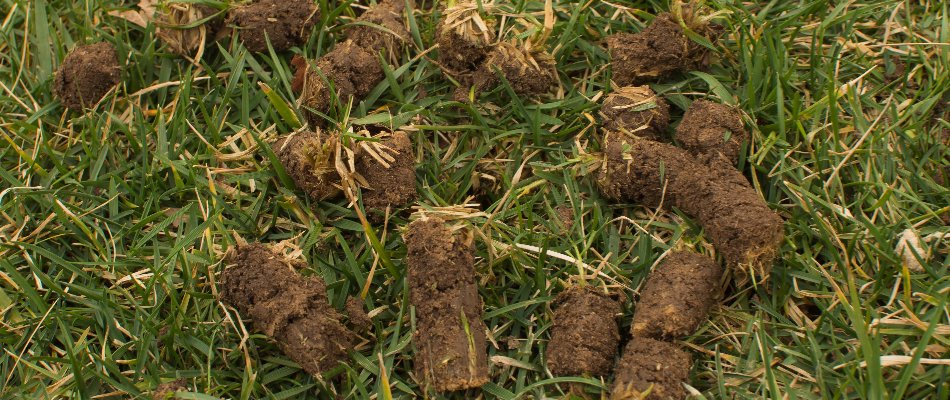
During the aeration process, an aerator pulls small plugs of soil, known as soil cores, from the ground. These cores are removed to alleviate soil compaction, which can hinder the movement of essential nutrients and water to the roots of your grass. Compacted soil creates a barrier that restricts root growth, leading to a less robust lawn.
Soil cores, while visually unappealing at first glance, are instrumental in reversing the negative effects of compaction. By creating channels in the soil, aeration allows for increased airflow and moisture penetration. This improvement in soil structure facilitates better root development and enhances the turf's overall resilience to environmental stressors.
What should you do with the soil cores left behind after aeration?
Once aeration is complete, the decision about what to do with the soil cores becomes important. Generally, it is advisable to leave them on the lawn to decompose naturally. As these cores break down, they reintegrate into the surrounding soil, returning vital nutrients. This process enriches the soil and provides a better growing environment for your grass.
The decomposition process of these soil plugs supports a healthier lawn ecosystem. If the appearance of the cores bothers you, or if you wish to hasten their breakdown, you can use a rake to spread them evenly across the lawn. Alternatively, mowing over them can help quicken their decomposition. Both actions facilitate the integration of organic matter back into the soil, improving fertility and lawn health.
While you can remove the soil cores after aeration, it's highly recommended that you don't do so.
While you can remove the soil cores from your lawn after aeration, it's highly recommended that you don't do so. The soil cores are full of nutrients that your lawn needs to thrive, and removing them can prevent it from receiving these valuable nutrients. Additionally, the soil cores help to fill in the holes created during the aeration process, which can help your lawn recover more quickly. By leaving the soil cores on your lawn, you're giving your grass the best chance to recover and thrive.
Call us today to schedule our core aeration service!
Aeration is a key lawn care practice that addresses soil compaction and ensures the roots of your grass have optimal access to vital resources. At Carolina Turf Lawn and Landscape, we offer a professional core aeration service that involves passing over your lawn with an aerator to remove plugs of soil, creating channels for nutrients and other resources to reach the roots of your grass. This service is offered in the fall for cool-season lawns and in the spring or summer for warm-season lawns.
We offer our aeration service to commercial and residential property owners, including HOAs, in Matthews, Charlotte, Midland, and throughout the surrounding areas in North Carolina. Call us today at (704) 649-0430 to schedule our aeration service!

Comments (0)
Thanks for your comment!
Thanks for your feedback! Your comments have been successfully submitted! Please note, all comments require admin approval prior to display.
Error submitting comment!
There is a problem with your comment, please see below and try again.